Skip to content
  • Home
  • About
  • Books of the EthiaVerse
  • The EthiaVerse Codex
  • Frequently Asked Questions
  • Writing Coaching & Mentoring
  • Blog
  • Book Reviews
  • The Writer’s Toolbox
  • Contact

The EthiaVerse

  • Book Review: How to Be a Writer

    December 29th, 2011

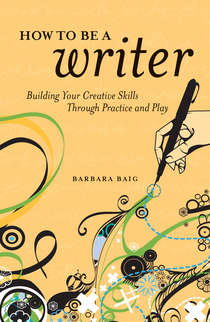
    At the beginning of the month I picked up a book that drastically changed my way of thinking as a writer. It is why I took a bit of a hiatus from this blog so that I could focus on the book and what it had to offer. I have to say it has made a significant impact on me. Barbara Baig’s How to be a Writer gave me what no other writing book or writing class had given me, permission to explore and experiment in my writing.

    My writing up to this point has been a self guided tour of something I’ve always wanted to do. I lacked the specific education and knowledge of how to be a writer, so I struck out on my own to find my way. In that journey, I found I really enjoyed writing and what it had to offer me. I occasionally had good ideas to write about, but as I wrote and practiced the craft of writing, I was constantly blocked by insufficient ideas to write about and believed I had a really bad case of writer’s block.

    This became quite frustrating even though I had helpful advice from writing friends, online classes and other writing books. I knew in my head about the writing process and how to fight writer’s block, but it wasn’t until I read Barbara’s book that explained it in a way I could understand. I realized that it wasn’t that I had writer’s block, but my approach to writing was hindering my ability to write.

    Barbara’s book is full of writing exercises centered around free writing, which asks questions that keep the pen moving. She also explains the writing process in great detail, breaking it down into individual parts of the seven main writer’s powers (Creativity, Memory and Expertise, Observation, Imagination, The Subconscious, Curiosity, and the Sherlock Holmes School of Writing). She discusses how to develop the content-mind of a writer and how to write to readers instead of for readers.

    The book is all about empowering the writer and I highly recommend it anyone who is just beginning as a writer, or the seasoned writer who needs to get back in touch with their inner writer. It certainly helped me and I will continue to use on my never-ending journey of how to be a writer.


  • Website Spotlight: Jane Friedman

    September 27th, 2011

    I recently stumbled across a website and I liked it so much I thought I would share. Jane Friedman has a wealth of information for the writer/author looking to publish, wonderful inspirational posts, and writing craft techniques. There is also a post that has a free market listing where you can find publishers and agents at no charge. Below are just some of the listings. Go to her site to see a full listing.

    Free Listing For Book Publishers 
    Be aware that most New York publishers do not accept unagented submissions, so sometimes “searching for a publisher” really means “finding an agent” (see next list).

    • Duotrope.com. For fiction and poetry only. About 3,500 listings total, which includes many types of publications.
    • QueryTracker.net. About 130 listings.
    • Preditors & Editors. Hundreds of listings; been going since 1997. Waves a red flag on publishers to avoid. However, unclear how often the information is updated.
    • Ralan.com. About 100 listings, focused on SF/F.
    • AgentQuery.com. Bare-bones list (no submission guidelines), but offers embedded links to publishers’ sites. Useful to preview the landscape.
    • WriterMag.com. If you subscribe to The Writer magazine, you get 3,000 online market listings for free. Vetted list.
    • Poets & Writers. Hundreds of listings, serving primarily the more literary side of the writing community.

       Free Listing of Agents 

      • AgentQuery.com. About 900 listings.
      • QueryTracker.net. More than 1,200 listings.
      • Preditors & Editors. Hundreds of listings; been going since 1997. Waves a red flag on agents to avoid. However, unclear how often the information is updated.
      • AAR Online. This is the official membership organization for literary agents. Not all agents are member of AAR.

       These links have been added to my Writing Resource page as well for easy access.

    • What is Deep Third or Deep POV?

      September 13th, 2011

      You may have heard the term Deep Third or Deep Point Of View, but what does it really mean?

      “Deep POV is to the writer what method acting is to the actor. It requires the writer to submerge herself in the character from whose point of view a scene is being seen. It requires a casting off of all inhibitions. The writer becomes the character.” (Exert from an article by Maeve Maddox at www.dailywritingtips.com).

      Deep Third is writing in the Third Person but taking it further by slowing down time and showing the reader what’s going on from the character’s point of view. It uses the surroundings, thoughts, feelings, or anything else to steep the reader with what’s going on in the characters head. Sensory detail (the use of sight, sound, smell, touch, and taste) can play a role in this as well. But it’s the thought process of the character that the reader needs to be plugged into. It’s about giving the reader an opportunity to “step into” the character’s head and be the character without even realizing it (if the Deep POV is done right).

      “What makes a point of view “deep” is how “close” we are to the viewpoint character’s thoughts.” (Exert from a blog by Jordon Mccullum) 

      The closer a writer can get to the character the more deep the point of view will be. In fact, it can take the reader from watching the character walk across the street to the reader actually feeling like they are the one crossing the street.

      EXAMPLE:

      Third Person: 
      It was a rainy morning as Janelle reached the cross walk with umbrella in hand. She waited for a lull in the traffic and walked across the busy street, not bothering to wait for the Don’t Walk sign to change. Janelle raced to the other sidewalk determined not to be late for work again.

      “Get out of the road!” a driver yell as he honked the horn of black sedan, spraying mud in all directions.

      Janelle stumbled to a stop almost losing her balance on the slick asphalt. Mud soaked her slacks, coat, and even her face. She groaned as she continued to the sidewalk. Janelle spat onto the ground to get the taste of dirt out of her mouth. She looked up to see a young mother pushing a stroller, giving Janelle an astonished look.

      Deep Third:
      A light drizzle splattered on her open umbrella as Janelle reached the cross walk. A Don’t Walk sign flashed a harsh warning. Janelle gave her watch a nervous glance. The digital numbers declared it 8:57. Late again. Mr. Roberts would be furious. She’d been making it a habit of being late for work, because of Sophie’s appetite for trouble. That damn dog! She should have known better than to take on a new puppy right now. It would probably cost her that promotion she’d had her eye on. Janelle could already feel the heat of Mr. Mr. Robert’s wrath, sending a shiver through her despite the heavy wool coat. Robert’s wrath, sending a shiver through her despite the heavy wool coat.

      Janelle peered through the mist to the sidewalk across the street. She still had three minutes. Janelle noticed a lull in the busy traffic. What the hell! She might make it if she hustled. Her building was less than a block away. Janelle sucked in her breath and stepped onto the slick asphalt, ignoring the orange words that blinked in silent rebuke. The thick musk of motor oil filled her nostrils as she raced forward.

       A jolt of excitement coursed through her realizing she just might make it. The sidewalk was only a handful of steps away! A blaring horn shattered her short-lived enthusiasm. Janelle skidded to a stop only to slip in the oily blacktop. She just managed to catch her balance and jump out of the way as a black beast thundered past.

      “Get out of the road!” a man’s voice screamed, matching the pitch of a bellowing horn.

      Black mud spurted into the air and rained down on her. She could feel the liquid goo on her face and in her mouth. She looked down to find her gray slacks and coat covered. Just great! Her new outfit was ruined. Janelle shot a heated glare at the taillights of the speeding sedan. Jerk!

       She continued her interrupted dash to the sidewalk with a hurried limp, the bitter tang of dirt choking her. Ugh! At last, she reached the safety of the sidewalk and spat onto the concrete to expel the foulness from her mouth. Janelle looked up to meet the astonished look of a young mother with a stroller. Yeah, this was shaping up to be one hell of a day.

      As you can see, writing in deep third increases the word count, but the picture in the reader’s head is much clearer because of it. Even though deep third is a wonderful tool, a story shouldn’t be written completely this way because it does slow down the momentum of the story. A sprinkle of deep third in just the right places should be enough to get the job done, so sprinkle away!

      Want to write in Deep Third yourself? Try this exercise. Write a scene in First Person and then change all the nouns and pronouns to Third Person.
    • Description Part 3: The Secret to Good Description

      August 20th, 2011

      I’ve already discussed the 3 Elements of Good Description and the 6 Pitfalls of Description, but I saved the best for last. What is the true secret to good description? Is there the one thing that will open the door to allow a writer to touch the reader and dive them into the wonders of a story? The answer is yes, and that one thing is word choice.

      The word or words chosen to describe something can make all the difference in the world. It can influence the reader’s mood and change the entire context of a sentence, paragraph, and even the characteristics of a character.

      I recently wrote a short story and gave it to a fellow writer to critique. She called me out (and rightly so) on a minor character because she thought he was too much of a stalker. It wasn’t my intention to make the character stalkerish, but I went back and saw that I actually used the world stalker to describe the character. So if I didn’t want him to be a stalker, then why use the word? In my case, it was a slip of the word, and I was in too much of a rush to go back and fix it. I wanted a different word, but failed to chose it because I was too lazy to find the appropriate word.

      Is this something you find yourself doing? I find I do it quite a lot. I settle for a word when I know it isn’t the right one. I know that the word I’m using isn’t setting the right picture or mood for what I want the reader to see and feel. Sometimes finding that perfect word can be difficult (even when I actually have the time to find it), in these cases the thesaurus is my best friend.

      Still not convinced that word choice is so important? Check out the examples below. You be the judge.

      Okay: The clown was enjoyable.  

      Definition of enjoyable: giving or capable of giving joy or pleasure. www.dictionary.com

      Better: The clown was amusing.

      Definition of amusing: pleasantly entertaining or diverting; causing mirth or laughter; humorously entertaining www.dictionary.com

      As you can see the words enjoyable and amusing have similar meanings but amusing gives the sentence an extra punch. It says that the clown was entertaining and fun, maybe even funny. Between the two words amusing evokes a better picture of what kind of effect the clown has on the people in the story.

      Okay: The sunset was a beautiful.

      Better: The sunset was breath-taking.

      This example shows a difference because it takes the sunset from being just plan beautiful to breath-taking. The words breath-taking gives a whole different picture. It is more descriptive because it makes the reader feel a since of wonder. The words even give the reader the reflex of taking in the breath.

      (Notice the bolded word since. It should be sense. Yet, another important thing to remember when choosing the right word. Make sure it means what it’s suppose to mean. The dictionary is your second best friend.)

      Don’t be afraid of words. Learn to experiment with them and get the best use out of your words to expand on a thought or idea. This is most important when describing characters. Use emotion and attributes to embellish a character and describe them. Don’t rely on the physical descriptions alone, and if you do a physical description make your words count.

      Okay: Charlotte was intelligent for her age.

      Better: Charlotte was a wise old soul. She understood more than most and always was quick with a solution; despite that she was barely old enough to drive.

      Okay: Anthony was a handsome man. He was very athletic and it showed.

      Better: Anthony’s skin felt taunt against the flesh of my hand. My eyes traveled the mountain ranges of his sculptured abs and I was afraid to meet his gaze. I knew those sapphire eyes were waiting for me to look up. His perfection made me feel small, unworthy.

      Words are powerful. They have the ability to shape minds and make the reader see what you want them to see, so they must be used carefully and placed just so. Make it a practice to take the time to find the perfect word.

    • Description Part 2: 6 Pitfalls of Description

      August 16th, 2011

      It has already been determined some of the positive elements of good description (see Description Part 1: 3 Elements of Good Description), but there are some pitfalls of description to be aware of as well. Here are six to keep in mind.

      1. Never use description that will serve the character, instead use description that will serve the story. That means don’t throw in description for the sake of just having it. If the description doesn’t enhance or move the story forward then cut it out. It will only serve to be a distraction.
      2. Description slows down a scene, so avoid describing a story element in the midst of an action scene unless you want a pause in the momentum. An alternative if you want description in an action scene would be to vary the sentence structure to include the details, but ultimately you should strive for shorter sentences in an action scene.
      3. Stay away from the clichés. One of the biggest clichés in description is for the author to put a character in front of a mirror and describe what he or she sees in the mirror.
      4. Be specific in your description, but not too much. Do not let the details limit the reader’s imagination. Be vague enough to let the reader paint a picture for themselves.
      5. Avoid purple prose, or overly flowery descriptive language. This sort of writing might be deemed acceptable for some types of works, or in older writings, but readers these days are looking for direct and concise writing.
      6. Unless a character’s clothing has a direct link to the characteristics or the story, it should be avoided, because it is nothing more than a distraction.

      Example: The man sat across from me in the crowded diner. It was hard to ignore the gut wrenching stench coming off of him and the splattered stains on his tattered clothes. It was obvious to any as if he had a neon sign around his neck reading, “I’m homeless.”

      This example shows a vague picture what the man is wearing, but it is used to describe his situation more than anything. The reader doesn’t need to know if he was wearing blue jeans or red T-shirt. It is enough to know that he has a stench about him, he has stains on his clothes, and the clothes are in tatters. The reader will use his/her imagination to fill in the blanks.

      Check out the last part of this series…
      Description Part 3: The Secret to Good Description

    ←Previous Page
    1 … 39 40 41 42 43 … 45
    Next Page→

    Proudly powered by WordPress

    Loading Comments...