What makes a great writer? Simple. The ability for a writer to evoke strong emotions in the reader. This is what the writer strives to do as he or she pours words onto a page. It is the second goal of a writer, to evoke a strong emotional response from the reader. The first goal of the writer is to write his or her heart’s desire (not to let others dictate what should be written). And in obtaining the first goal, the second goal can be realized. This happens because the writer truly feels the words and what’s being said, which is passed onto the reader. One of the best ways to write with emotional depth and with true desire is to tap into old memories, letting them loose onto the page.
Tag: The Writer’s Toolbox
-
 Why are writing exercises are so important? How often should you do writing exercises? Where do you look to find writing exercises?
First, I want to say that I love to write, but it doesn’t come without inspiration and a lot of hard work. Sometimes a writer has to write without inspiration to get the job done, but eventually writers do need to be re-inspired to find that spark of creativity that caused them to write in the first place. A great way to rediscover that spark is through writing exercises.
Every writer is different. Some writers need the jolt of a writing exercise every day before they begin writing. Others just need the help when beginning new projects or to come up with new project ideas. And there are others (like me) who only use writing exercises every once in a blue moon to take a break from regular writing so to relight the candle of creativity inside.
-
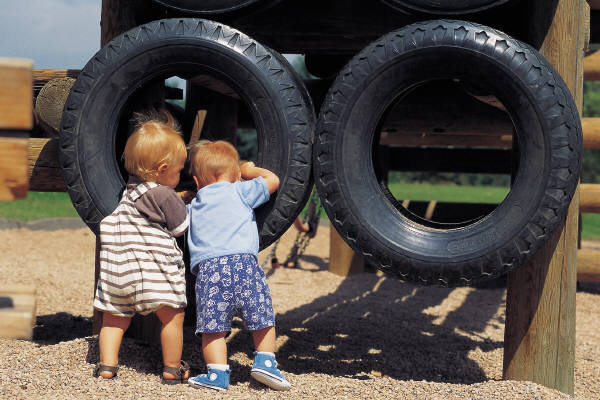
 As a mother of a five year old boy, I find that I frequent the local parks quite a bit. In fact, it is probably my most visited location besides the grocery store since my son’s birth. In spending a lot of time at playgrounds, I’ve discovered a true writing treasure- the ability to study a wide variety of characters and the basic human condition in just an hour or two of doing my most important job of all- “being mom”.
Want to get a good glance at an array of human behaviors from antagonistic, insecure, mischievous to friendly, confident, and intuitive? Just take a trip to the park, and let this small playground world give a glimpse into the bigger world. It’s a cast of characters waiting to be plucked for a story or novel, or just to be studied to understand reactions to certain situations. It’s humanity raw with all the complexities of adulthood stripped away. It’s the simplicity of behaviors at the most infant stage. Friendships are forged in a matter of one slide down the big red twisty slide. Or witness that awkward moment when no one can agree on what to play, or personalities clash like a display of colorful fireworks. It’s all there to see for anyone willing to watch. It’s where priceless moments are created and children learn to belong, or just find out how annoying some kids can really be. But the kids aren’t the only illuminating presences at the park. Some of the most interesting playground lurkers are the parents themselves.
-
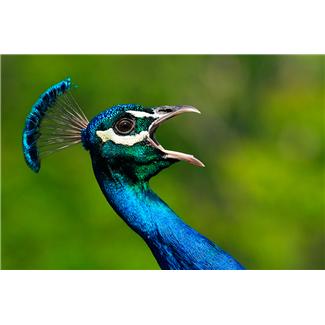
 I always love doing exercises. Sometimes I do them based off photographs. Sometimes I do them based off phrases or a series of words. I thought I would do something a little different and try an exercise based off an image and random words. Here’s an image I found at Office.Mircrosoft.com. I then picked up a random book and flipped through it picking words until I had six random words; happy, shape, wasp, friend, object, and dead. Now I was ready to be inspired. Here’s what I ended up with.
 -
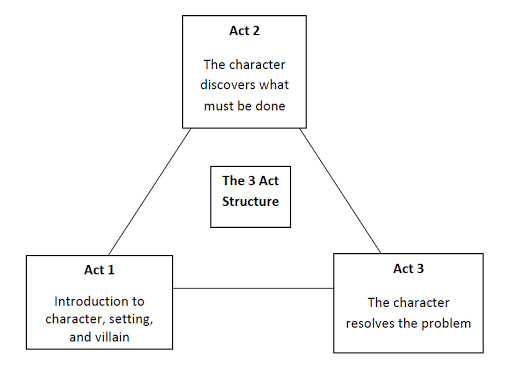
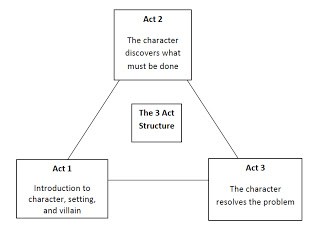 In the recent writing workshop with Johnathan Maberry we talked a lot about the 3 acts of the story structure. This workshop made me realize once again how helpful this little tool can be when plotting out a story. Most stories can be broken down to this basic structure and it is something to use as a guide when plotting out your own story. Let’s break down the 3 acts and see what each act entails. I’ll also use an example of the Wizard of Oz to show this breakdown.
ACT ONE it is the introduction of characters and setting, possibly a glance at the villain and an introduction to the threat within the story.
This is where all the reader needs to become familiar with the character and become invested in the story that is unfolding. The world needs to be established
END OF ACT ONE happens when the character reaches the point of no return. He or she is propelled or pushed forward into the story and the character’s path is set
Example: Dorthy is introduced into the story. We see that she is a young girl who is spoiled and untested. A tornado whisks her away to the strange land of Oz.
ACT TWO this middle act usually takes up about 50 percent of the story as the character is further developed and the stakes become clear.
This is where relationship building happens between the main character and the supporting characters, and it’s were subplots usually take place (for novels or longer short stories).
END OF ACT TWO happens when the character realizes what must be done to resolve the problem that he or she has been faced with.
Example: Once in Oz, Dorthy meets Glinda. She tells Dorthy what must be done to go home and Dorthy sets out on her mission to find the Wizard of Oz.
ACT THREE is when the character finds the resolution to the problem.
This is where the character rises above everything in his or her path to be the story’s champion.
END OF ACT THREE happens once the character resolves the main issue of the story either for the good or bad.
Example: Dorthy defeats the wicked witch and finds the Wizard of Oz.
Now it’s true that the 3 act applies mostly to screen plays, but it can also be applied to most stories as well. Sometimes the acts are expanded to create more than three, and sometimes the first act is combined with the second act in stories, but using the three acts can help to show the skeleton of a story. It’s a good simple way to make sure a story is on the right track to creating a coherent and dynamic piece of work. If you haven’t already, can you break down your current piece of work and find the 3 acts of its structure?
There are also those who argue that a 3 act structure can’t show all the elements of a story that it really takes a 5 act structure. This type of structure just breaks down the story even further with exposition, rising action, climax, falling action and the denoucement or resolution. You can read more about in a post that I wrote a while ago about Freytag’s 5 act structure.