What makes a great writer? Simple. The ability for a writer to evoke strong emotions in the reader. This is what the writer strives to do as he or she pours words onto a page. It is the second goal of a writer, to evoke a strong emotional response from the reader. The first goal of the writer is to write his or her heart’s desire (not to let others dictate what should be written). And in obtaining the first goal, the second goal can be realized. This happens because the writer truly feels the words and what’s being said, which is passed onto the reader. One of the best ways to write with emotional depth and with true desire is to tap into old memories, letting them loose onto the page.
Tag: how to write
-
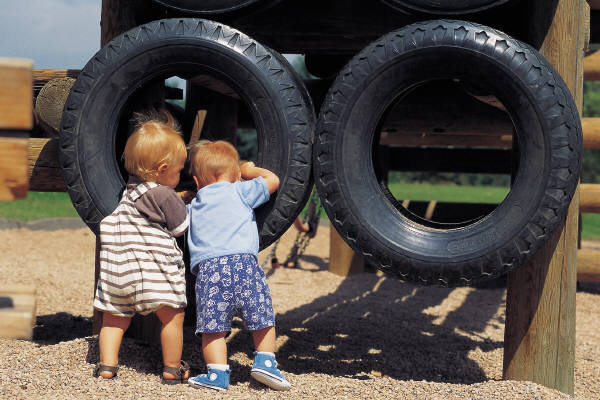
 As a mother of a five year old boy, I find that I frequent the local parks quite a bit. In fact, it is probably my most visited location besides the grocery store since my son’s birth. In spending a lot of time at playgrounds, I’ve discovered a true writing treasure- the ability to study a wide variety of characters and the basic human condition in just an hour or two of doing my most important job of all- “being mom”.
Want to get a good glance at an array of human behaviors from antagonistic, insecure, mischievous to friendly, confident, and intuitive? Just take a trip to the park, and let this small playground world give a glimpse into the bigger world. It’s a cast of characters waiting to be plucked for a story or novel, or just to be studied to understand reactions to certain situations. It’s humanity raw with all the complexities of adulthood stripped away. It’s the simplicity of behaviors at the most infant stage. Friendships are forged in a matter of one slide down the big red twisty slide. Or witness that awkward moment when no one can agree on what to play, or personalities clash like a display of colorful fireworks. It’s all there to see for anyone willing to watch. It’s where priceless moments are created and children learn to belong, or just find out how annoying some kids can really be. But the kids aren’t the only illuminating presences at the park. Some of the most interesting playground lurkers are the parents themselves.
-
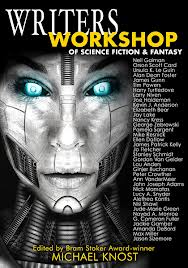
 I ordered Writer’s Workshop of Science Fiction and Fantasy when it first came out earlier this year, knowing it would be great because of it’s predecessor Writers Workshop of Horror. Both of these books should be on all aspiring writers bookshelves, as they give wonderful insights on all sorts of writing areas.
The best part about Writer Workshop of Science Fiction and Fantasy is that you don’t have to be a writer of science fiction or fantasy to get something useful out of the book. Most of the topics touch on areas that span all genres of story telling. Just some of the topics covered in this book are; Beginnings, Middles, Endings, Unbending Gender, Tactics of World building, and Rhetoric and Style.
Editor Michael Knost has brought exceptional authors together to tell how they do it right. It’s then up to the reader to decide what works best for them as they read and apply the techniques to their own writing.
-
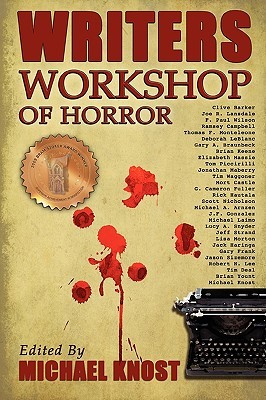
 Writers Workshop of Horror is a fabulous book complied by editor Michael Knost who brings authors together to talk about what works for them in certain areas of the writing craft. Authors like Tom Piccirilli, Johnathan Maberry, Tim Waggoner, Joe R. Lansdale, and Brain Keene.
Not a horror writer? No problem. That’s the best part about the book. The topics talked about in this book work for any genre from romance to steampunk. Just a few topics discussed are; Point of View, Dialogue, Manuscript Formatting, and Ten Submission Flaws that Drive Editors Nuts.
After reading this book, I felt like I’d been apart of a whole weekend of writer workshops instead of at home reading a book about writing. Each topic has a unique and individualized approach that makes it fun to read as well as informative. This is a must have book for aspiring writers.
-
 I recently was told about Writing the Breakout Novel Workbook by Donald Mass and decided to order a copy and give it a shot. Wow! What a difference it has made in the way I approach a story. This book is a wonderful way to help work out the character and plot kinks of a novel, but it is also very helpful with short stories as well.
This book is sectioned off into three parts Part 1: Character Development, Part 2: Plot Development, and Part 3: General Story Techniques. Each part then goes into great detail about each element within the categories. I love that Donal Mass has included a little “lesson” and follows up with exercises where I can input my own information, depending on the story I want to work on.
I highly recommend this book to anyone serious about writing a novel, or writing period. I, for one, give it huge points just for helping me figure out the tangled weave that is my novel Blood Feud. Thank you, Donald Mass.
Note: This Writing The Breakout Novel Workbook is NOT the same as the Writing the Breakout Novel. I have yet to read the latter, but from reviews, the Workbook is geared more to actively working on the plot of a story. The Writing Breakout Novel seems to take a more academic approach.